
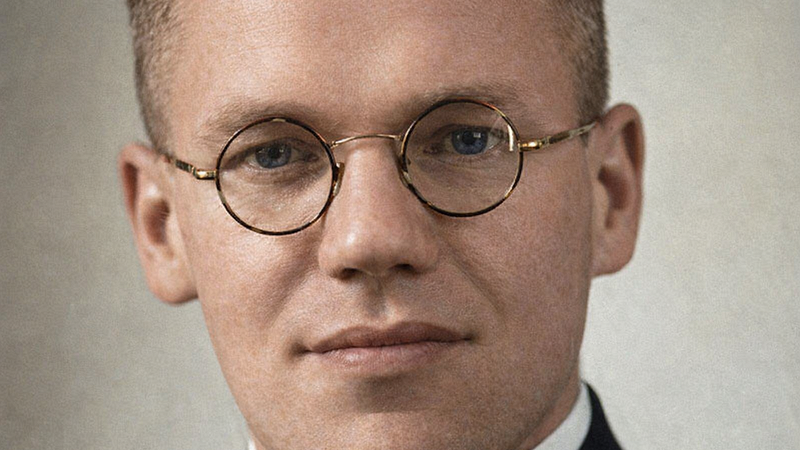
The Archdiocese of Vienna launches the beatification process for Fr Titus Helde
The Archdiocese of Vienna has taken the first steps towards a beatification process for the Salvatorian Father Titus Helde. The religious died in Mistelbach on 22 April 1945 when he stepped in front of several women to protect them from violence. He was venerated as a martyr shortly after his death. Martin Kolozs has been appointed postulator for the process. He has been tasked with gathering all relevant information about the life, work and death of Father Helde, as well as interviewing contemporary witnesses who are still alive, as the Archdiocese of Vienna states on its website.
The Archdiocese of Freiburg, from which Helde hails, also supports the project. Archbishop Stephan Burger stated in a comment on 11 March that he welcomed the fact “that interest in the life and work of Fr Titus Helde SDS remains alive in the Archdiocese of Vienna and is now leading the Salvatorians to consider whether a beatification process should be initiated in this matter”.
Approval of the application on 9 February
Father Titus Helde died in Mistelbach, Lower Austria, in 1945 whilst shielding women to protect them from sexual assault by soldiers. Since then, the religious priest – who was born in Radolfzell on Lake Constance in 1905 – has been remembered as a martyr. At the end of last year, the Austrian Provincial of the Salvatorians, Fr Márton Gál, applied to the Archdiocese of Vienna to open a beatification process. Following the unanimous approval of the Bishops’ Council, Archbishop Josef Grünwidl granted this request on 9 February.
Father Titus (Josef) Helde was born on 5 May 1905 in Radolfzell on Lake Constance. He initially worked as a bank clerk before joining the Salvatorian religious order in Steinfeld in 1926. He was ordained a priest on 29 June 1938. During his training, he served in Lochau, Heinzendorf, Passau, Hamberg, Graz, Vienna and Mistelbach, amongst other places.
n the context of the Nazi dictatorship from 1938 to 1945 and the violence in the immediate post-war period – in particular that perpetrated by Soviet soldiers, some of whom were described as extremely brutal – the political and social climate had changed fundamentally. In this situation, on 21 April 1945, Father Titus stepped in to protect a group of women from assault and was shot dead by a Red Army soldier, according to the Archdiocese of Vienna. Shortly after his funeral, he was already being hailed as a martyr by the faithful. He was deeply mourned, and people prayed for him and to him.